


Better conversations when something important is at stake.
Feeling unprepared
A difficult conversation coming up?
(There's always one, isn't there?)
Some people deal with the prospect by:
- stressing about it
- thinking up schemes for avoid it
- losing sleep
- imagining all the worst-case scenarios
- rehearsing phrases out loud – or in their head
- wishing they could disappear from the planet.
They're all attempts to get better prepared.
Not very effective ways, most of the time.
If only there were a better way to prepare... so you could turn your mind from visions of disaster to your best-case outcome.
Turn your mind from visions of disaster to your best-case outcome.
Prepare for the outcome you want
Easier said than done, of course.
Getting clear on what you'd like to happen can be surprisingly difficult.
And yet – you can't steer towards an outcome you haven't imagined.
So the first task is:
to imagine the outcome you'd most like to see happen.
Some people do this by writing out what their best-case scenario might look like.
Some get a coach or a therapist to help them put their ideas in order.
Some get started by drawing.
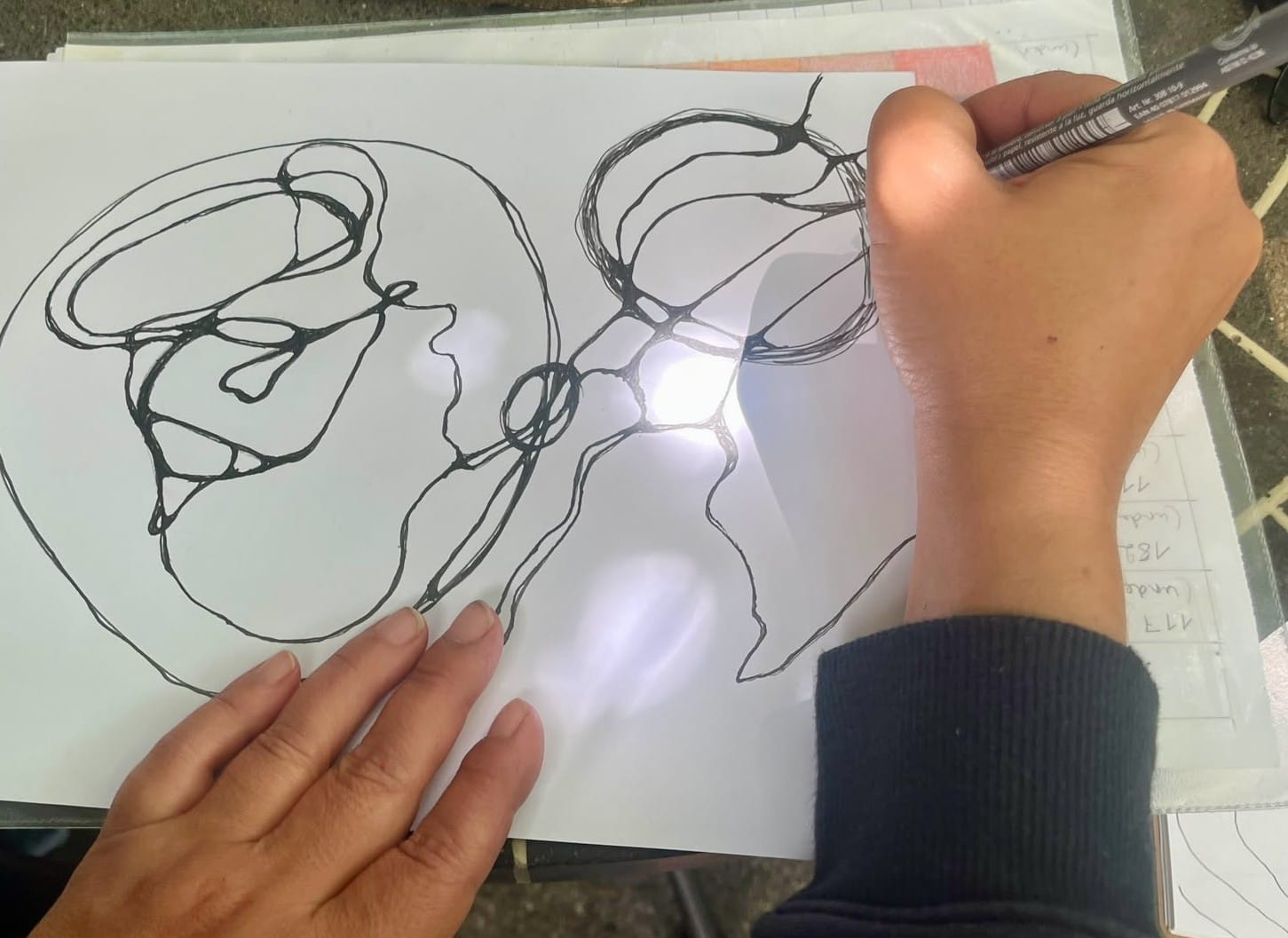
"I was curious: How could drawing help me think?
"The surprise was: you can draw about something — almost as if you're writing about it, but without words getting in the way."
~ Tsveta Dimova, writer, acting coach, theatre-maker
When words keep you in the loop
Thinking about a difficult conversation can easily turn into more of the same anxious thinking.
What if they say this?
What if I say that?
What if it all goes horribly wrong?
Drawing gives your thinking somewhere else to go.
Instead of trying to reason your way out of the loop, you can work with the question visually — and begin to notice possibilities you weren't seeing before.
NeuroGraphica® is a tool for non-verbal thinking.
It uses simple lines and shapes to help you think where words can't yet reach.
No artistic ability required.
No drawing experience needed.
Just paper.
A marker.
And curiosity.
Prepare for the conversation you want to have
Over three 2-hour sessions, you'll use NeuroGraphica to XXXX
Workshop 1
Dispelling the Dread
Loosen the grip of anxious anticipation and make room to think beyond everything that might go wrong.
Workshop 2
Gather the Threads of Optimism
Explore the possibilities, resources and signs of hope that could help you imagine a more desirable conversation.
Workshop 3
Discover the Shape of What You Want
Clarify the conversation you'd most like to have — and how you'd like to show up for it.
What you might discover
You may come away with:
- a clearer sense of what you're actually hoping for from the conversation
- a wider view of what might be possible
- a better sense of the resources and possibilities already available to you
- greater clarity about how you'd like to show up
- a visual record of your thinking to return to before the conversation
And perhaps something even more useful:
the feeling that you don't have to walk into the conversation carrying every possible outcome in your head.
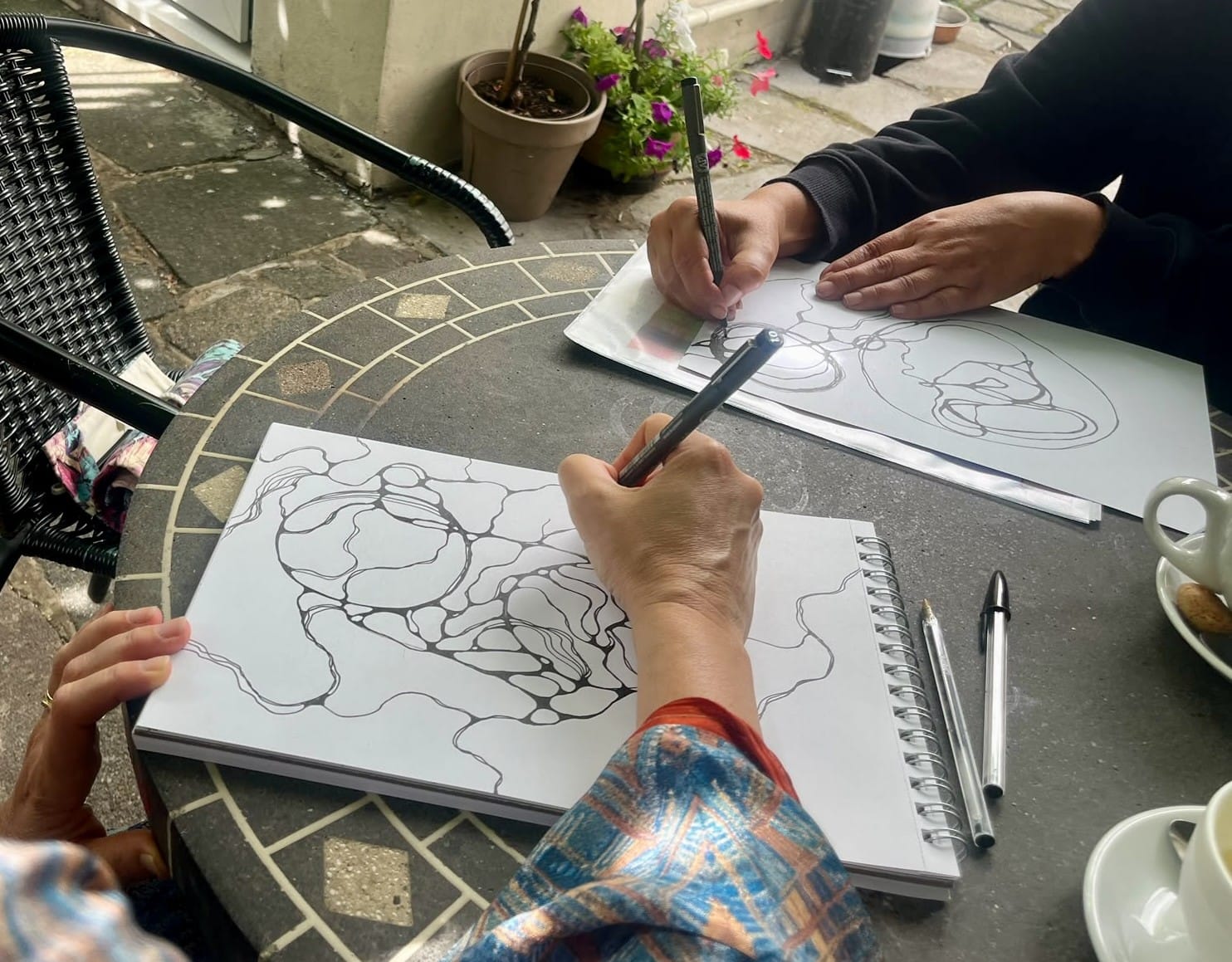
[PLACEHOLDER IMAGE & COPY]
NeuroGraphica helps me find my way back to writing.
A tool you can use whenever something gets stuck
By the end of this journey, you'll have something that stays with you.
NeuroGraphica isn't just something we do during the workshops.
It's a practical thinking tool you can return to whenever something feels tangled, overwhelming, or out of reach.
You're not just leaving with three workshops behind you.
You're leaving with a tool for getting unstuck.
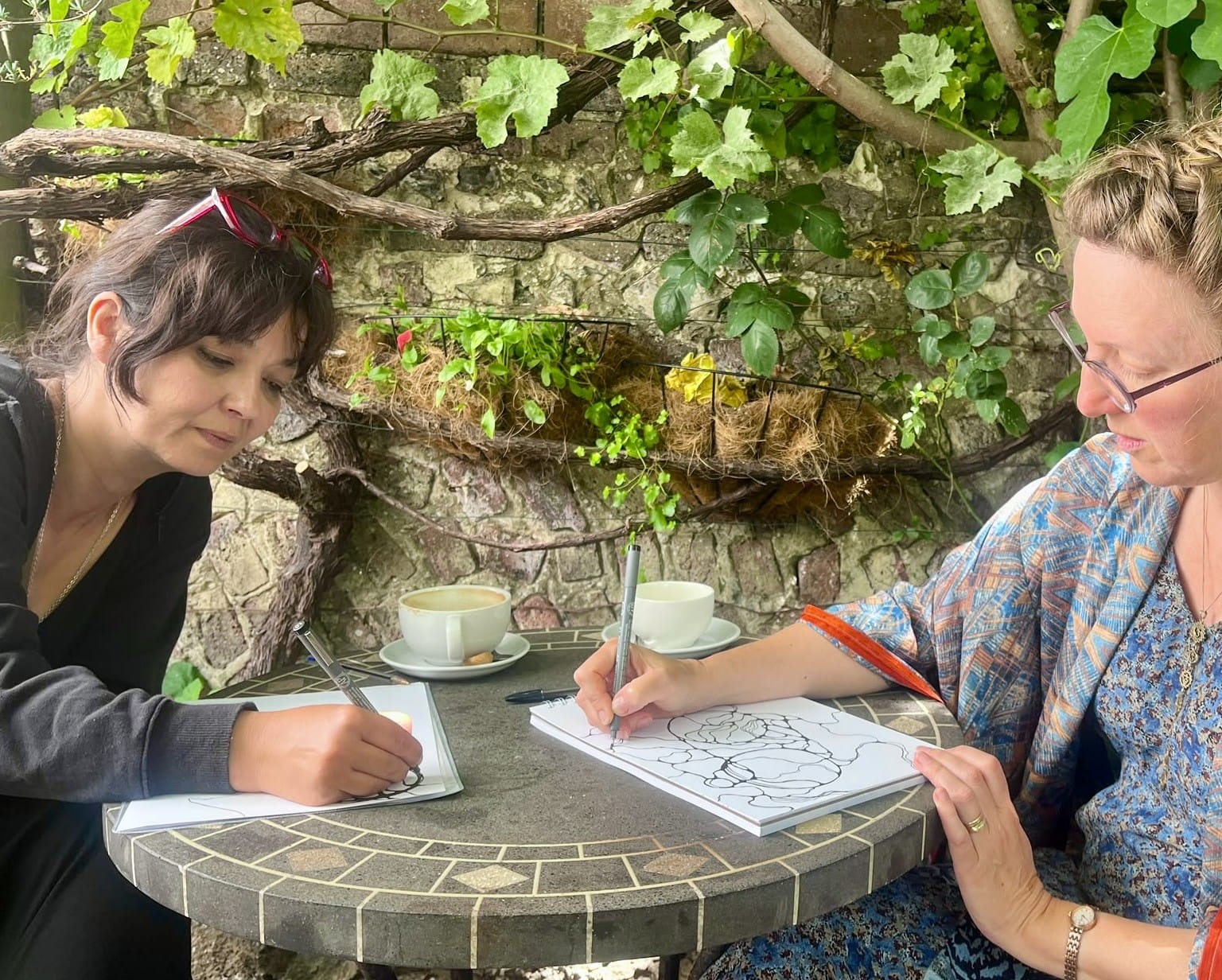
"Months later, I still reach for this when I need it."
I'm running this first as a small pilot.
If you'd like to hear when dates are released, leave your details below.