



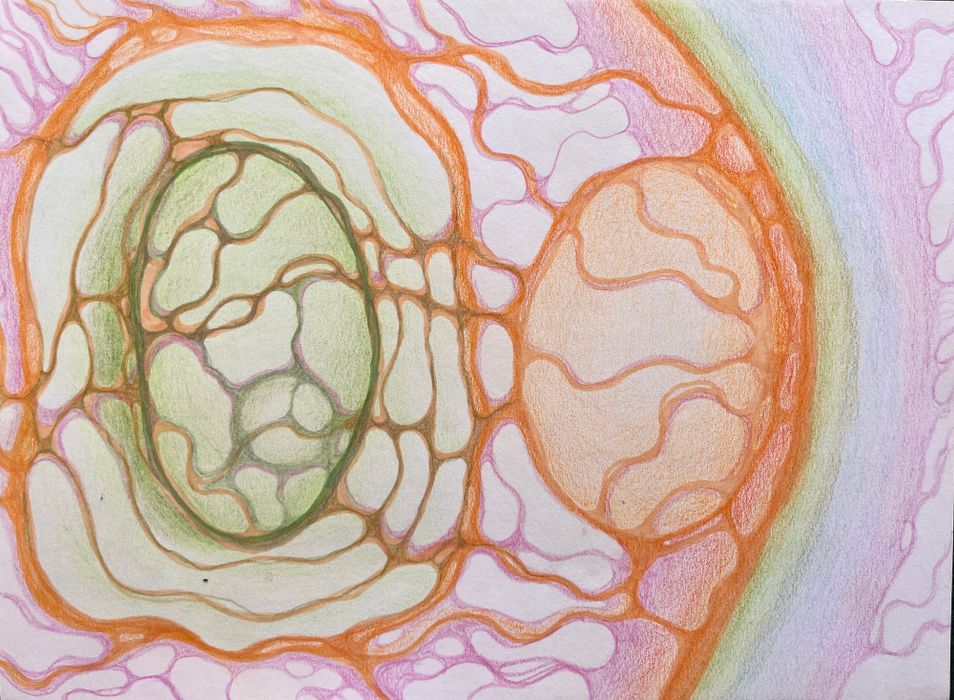
What's your dream?
If you don't have an answer for that question — if you seem to have lost your passion somewhere along the way, and your work or business are suffering as a result — that doesn't mean your dream is gone.
More likely, you've just lost touch with your dream.
If your work or business feels like it's suffering, it's often not a strategy problem. It's a dream problem. Somewhere the "why" got buried under the "how," and without it, everything feels heavier than it should.
If you're searching for empowerment, it rarely starts with trying harder. It starts with reconnecting — to what you actually want, underneath everything you've been told you should want.
If you have goals but they feel flat, or out of reach, that's often a sign the goal isn't the real dream. It's a stand-in for one you haven't fully let yourself see yet.
Find your way back to inspiration
This is exactly what NeuroGraphica was made for.
The way to reconnect with your inspiration is not through thinking harder about your problems. Instead, try picking up a marker and letting your hand show you what your thinking mind can't yet put into words.
No drawing experience needed. No art skills required.
Just paper, a pen, and a willingness to see what shows up.
A NeuroGraphica workshop can help you:
- Reconnect with a passion that's gone quiet
- Get unstuck when your work or business feels stalled
- Find the empowerment that comes from knowing what you actually want
- Turn a vague goal into something real you can move toward
- Discover a dream you didn't know was still there
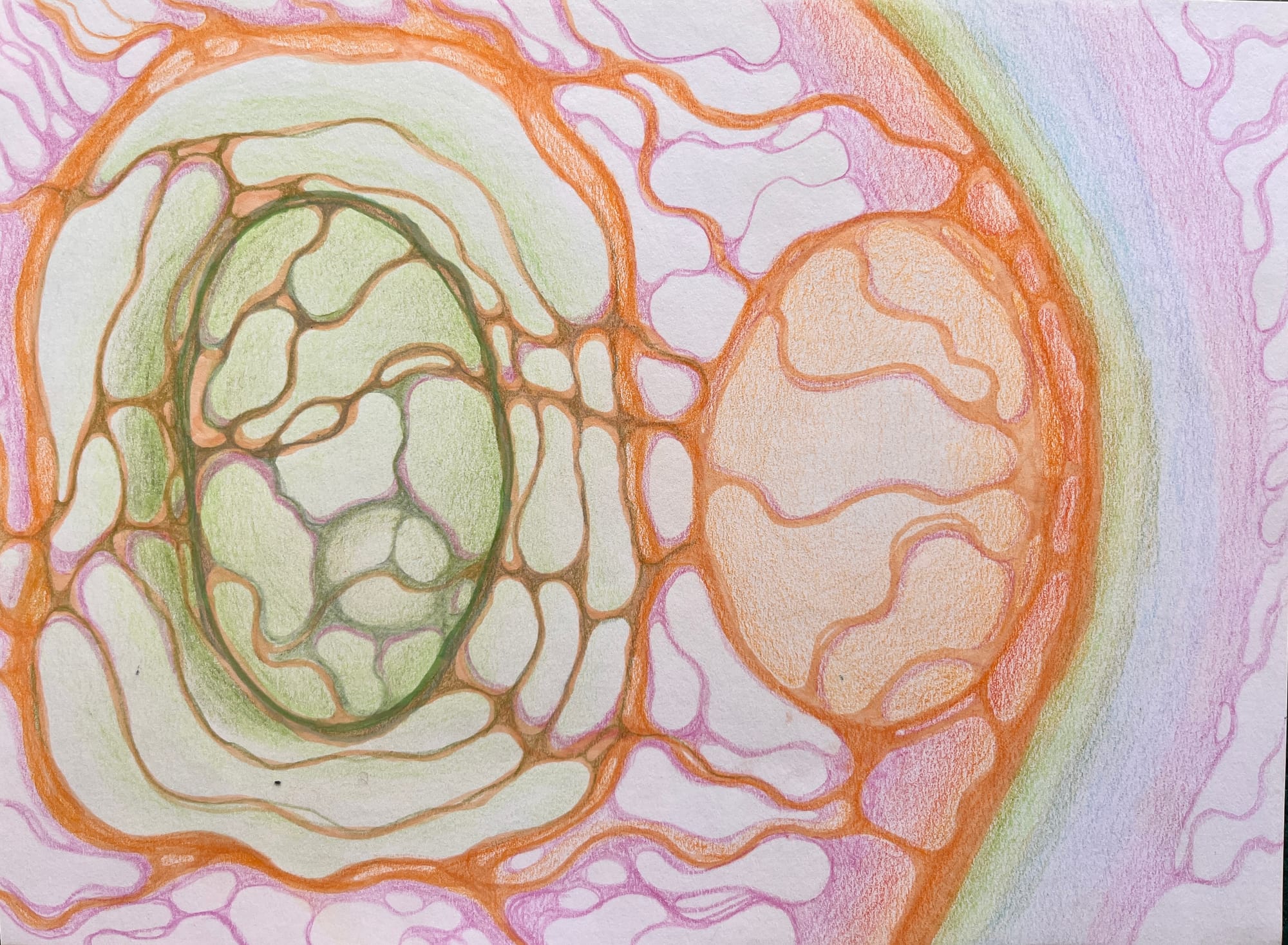
Everybody knows?
It might seem like everyone else knows what they want.
As if it's an automatic function for everybody else – which has somehow gone rogue or missing in you.
What if I told you that I meet scores of people who don't know their dream?
They look for it and cannot find it.
Many end up thinking that they just don't have a dream.
I've been in that place.
I've cried those tears.
Here's what I've learnt:
Dreams don't always arrive ready-formed.
Your dream may be like a tiny unborn chick inside an egg.
It's not waiting for you to find it – it's waiting for you to nurture it to come alive.
My story
Ever met a toddler who didn't know what they want?
Exactly.
A toddler starts out ready to reach for what attracts them.
And then life happens.
With enough discouragement from people or circumstances, you can learn to block that inborn impulse.
That's the first half of my story.
As a toddler, I expect I was just like the others – alive to the impulse to reach for what she wanted.
Then disappointments came.
I learnt what it was like to live without a mother.
I got bullied at school.
I grew accustomed to feeling scared, every day.
So I taught myself to hold back.
I reckon I got so good at holding back, I even learnt how to hold back my thoughts.
But that – not knowing what I wanted – got me into even bigger trouble. Because when you don't know what you want, somebody else might decide to use you for what they want.
After my son was born, I went around depressed, thinking "I simply no longer believe fairytales".
What I really meant was: I don't believe that dreaming's worth the bother.
I felt disheartened and disenchanted.
I thought I'd dedicate my life to raising my child, and leave it at that.
But as my son grew, I realised something very painful.
I couldn't teach my son to fully live, if I carried on putting my own life and dreams on hold.
So, after buckets of tears, and still feeling scared to bits, I opened up the box at the back of my mind where I'd stashed my ability to dream.
That's how I learnt that dreams often don't arrive ready-formed.
They're like tiny unborn chicks, waiting for warmth to help them grow and break out of their eggshell box.
I remember being given a live egg to hold. The farmer said it was about to hatch.
I held the egg carefully cradled in both hands. It wasn't lying still, like eggs in our fridge back home. It jostled around, as the chick pecked at the shell from the inside, striving to break free.
To my kid's eyes, it seemed like a miracle when the chick — a chick that no-one had ever seen before! – clambered out.
The chick seemed like a miracle... but it looked dishevelled and disorientated, its feathers soaked so they stuck to the chick's skin in clumps. It took a half-hour before the chick looked fluffy and cute.
When I first reached into my box of stashed-away dreams, I felt like that dishevelled chick.
It felt raw and bewildering to touch my dreams.
I found out that dreaming isn't always pleasant or easy.
Sometimes it takes enormous courage to dream.
People ask me what moved me to study practical psychology.
The truest answer I know: it was love.
Love for my son.
Love for the life he could live.
And love for the life I could create.
I turned to psychology looking for answers for myself first.
What I found wasn't answers – it was how to warm and nurture the tiny chick inside the egg of someone's dream.
Let your hand dream
It can be hard to dream by sitting and thinking.
Your thoughts get tangled or distracted.
Which leads you back to thinking that perhaps you don't have a dream.
What if you could let your hand bring extra warmth to nurturing your young chick of a dream?
Your hand can help you to surprise yourself.
It can make visible what your thinking mind cannot yet put into words.
The point is:
dreaming is something you can lose — and something you can learn again.
A different doorway
This is what excites me about NeuroGraphica.
It gives people a way to begin before they know.
You can simply take a marker and explore.
Your hand can lead your thinking mind to places where it hasn't been yet.
It can coax something to emerge: a shape, a feeling, a possibility. A tiny wish that had been waiting under all that discouragement and heartache.
I've been using NeuroGraphica for myself, and I've also been teaching it to others. It is one of the resources I've found that can give this mysterious business of dreaming a surprisingly simple doorway.
Paper.
Marker.
Curiosity.
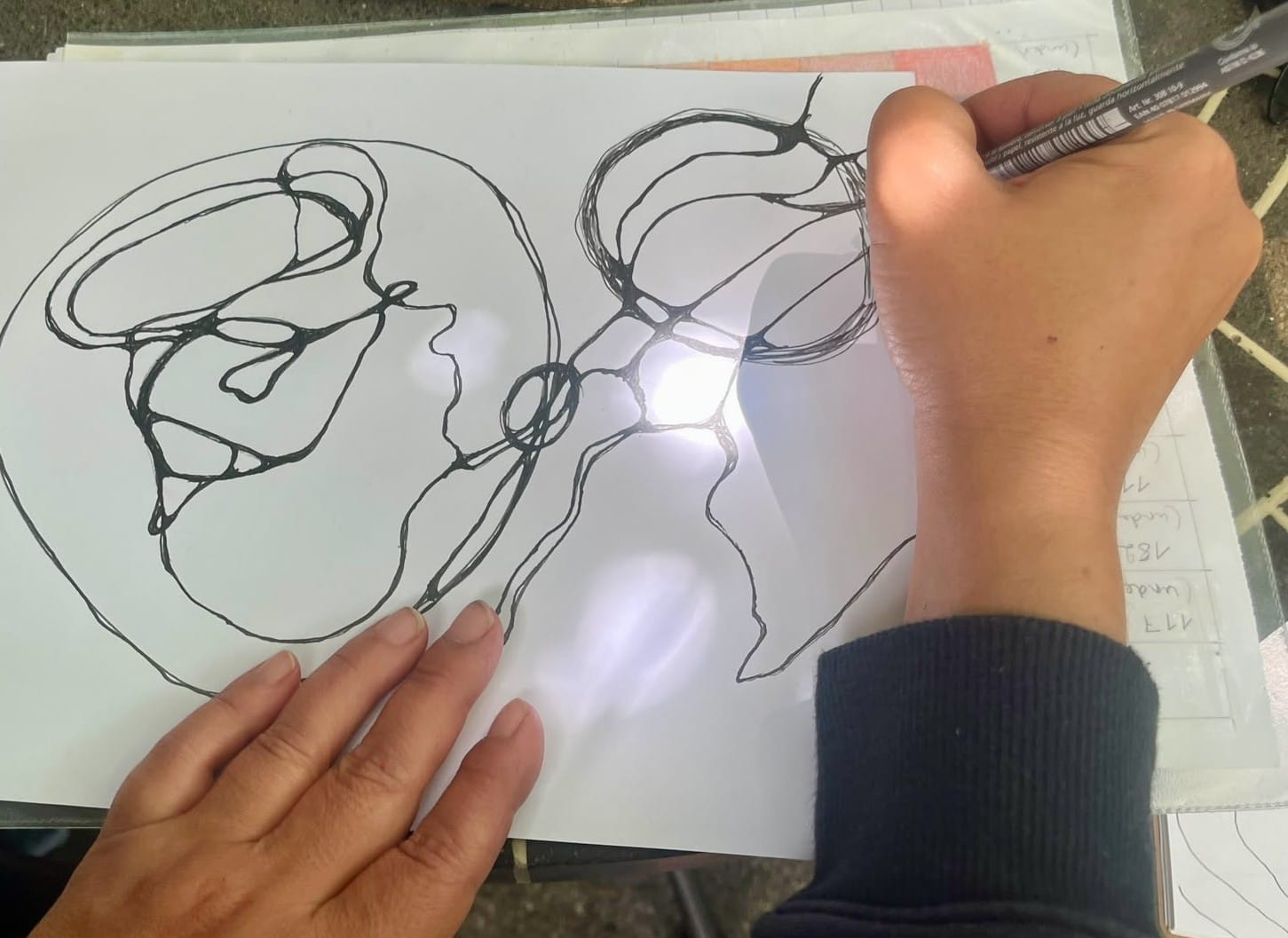
"I was curious: How could drawing lines help me think?
"The surprise was: you can draw about something — almost as if you're writing about it, but without words getting in the way."
Tsveta Dimova, business owner
Your dream stirring
NeuroGraphica won't birth your dream in one fell swoop.
It's much more common that a dream first peaks through as something tiny, awkward, confusing and vulnerable.
Dreams tend to emerge like that chick in my palm: wet, dishevelled and bewildered.
But then it can shake its feathers out and take flight.
Your dream in the palm of your hand
Some people don't need help achieving their dream.
They need help discovering that they have one.
So here's an invitation to begin.
To warm the egg.
To listen for the pecking from inside.
To see what might be waiting to hatch.