




Table of Contents
When people first encounter NeuroGraphica (NG), they often imagine one of two things:
either
“This is totally free intuitive drawing”
or
“This is a structured psychological method with set procedures”
The interesting thing is: it’s both.
NeuroGraphica achieves this balancing act through two intertwined elements: a shared foundational process, and a range of named compositional templates.
The Basic Algorithm
At every NG drawing session, the process follows a core sequence that the NeuroGraphica founder Pavel Piskarev refers to as the Basic Algorithm.
The Basic Algorithm ensures that lines and shapes get conjoined to create an integrated web representing your experience of your chosen theme.
The Basic Algorithm is how all three major levels of psychological perspective get woven together:
- intra-personal: what happens within one individual psyche
- inter-personal: the psychology of what happens between people
- trans-personal: the transcendent, dealing with larger forces, such as nature, cosmos, archetypes and so on.
Thanks to the Basic Algorithm, the benefits of your internal transformation get harvested at a word level.
The Basic Algorithm is basic rhythm of drawing NeuroGraphica, underpinning it as a coherent and distinct visual language.
Named templates (aka algorithms)
While the Basic Algorithm describes the sequence of steps, each drawing is shaped as a specific composition.
NeuroGraphica has developed a range of named templates (also referred to as algorithms in the standard NeuroGraphica nomenclature).
Each NG template is designed to work with a particular type of theme, challenge or developmental task.
You can think of templates as structured applications of the wider NeuroGraphica language.
Some are designed to help people work with inner conflict or limitation. Others help you get clear on your goals, explore aspects of your identity, relationship dynamics, life direction, resources, values or possibilities.
The templates provide enough structure to help you start the process with purpose, without reducing your experience to a rigid framework or a predetermined outcome.
In this sense, they function rather like compositional frameworks in art, or forms in music: containers that guide exploration while still allowing for individuality and discovery.
The foundational templates
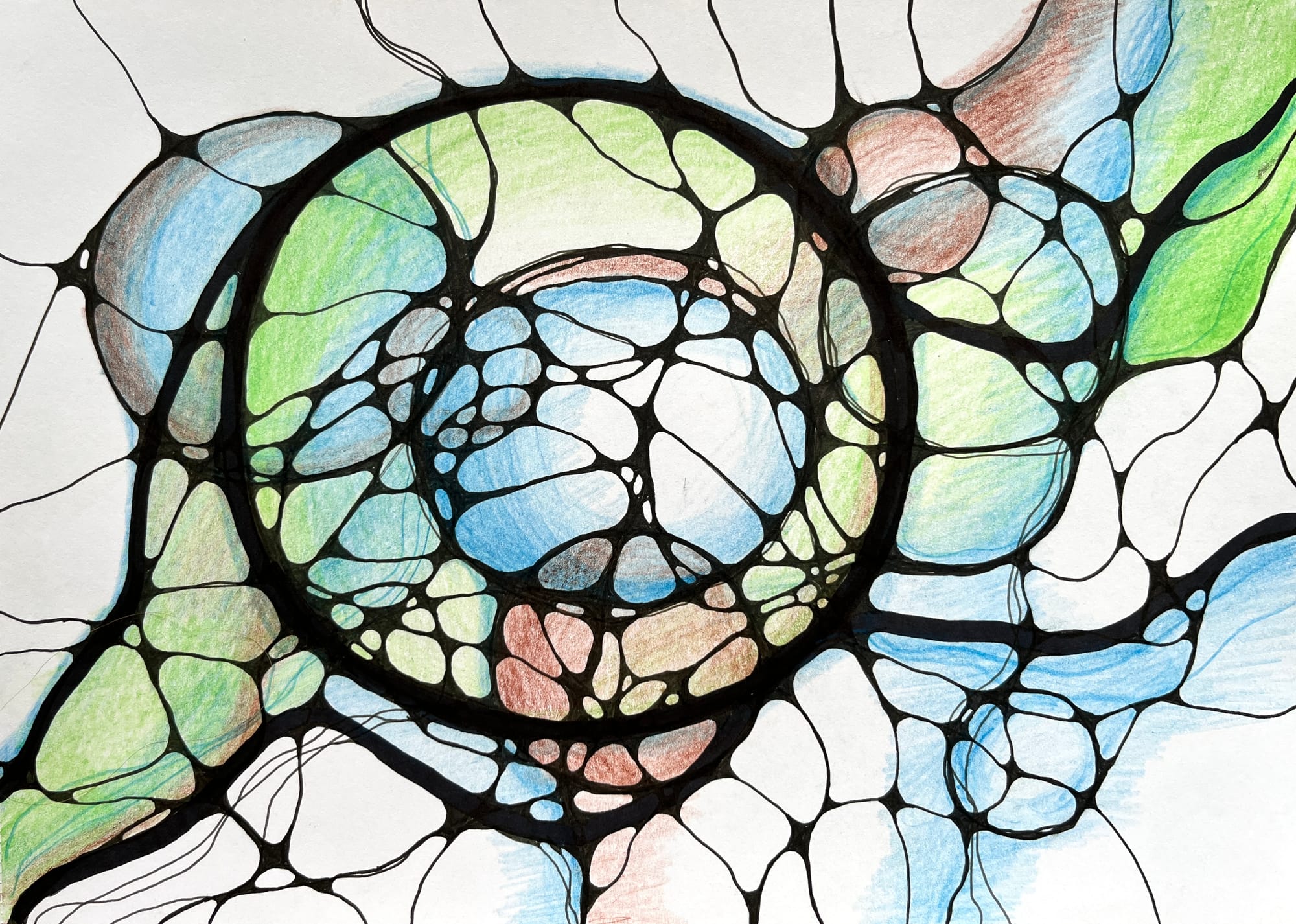
The first two templates many people encounter are:
ARL — Algorithm for Removing Limitations
and
ALI — Algorithm for Revealing Intentions
ARL begins with a sense of friction, tension or blockage — something experienced as difficult, constrained or unresolved.
ARL is where many people first experience the peculiar magic of:
“Wait… how did drawing lines on paper help me think and feel differently about this issue?”
ALI, by contrast, works more directly with intention, gathering together ideas and possibilities, helping you create shape out of confusion.
Where ARL often begins with:
“What is limiting me?”
ALI asks:
“What am I moving towards?”
These templates are often taught first, because ARL helps create space for new perspectives and experiences, and ALI helps you gather together the threads when new ideas and feelings begin to emerge.
Other NG templates
There are a number of other established NG templates/algorithms, each with a name and a specific purpose, e.g.:
- NeuroTree — often used for growth, life direction, resources, aspirations
- NeuroLotus — harmony, relationships, balance, unfolding potential
- NeuroRain — emotional release, renewal, replenishment
- NeuroMandala — integration, centring, coherence
- Timeline / NeuroTimeline — life path, future orientation, transitions
Follow whichever thread is tugging at your curiosity.
If you'd like to understand this a little more deeply
→ Why NeuroGraphica doesn't begin with dreams
If you'd like to explore this through a different lens
→ The three conversations of a human life
If you're wondering whether this might be for you
→ NeuroGraphica: draw your dreams




Comments